Meditation has become a buzzword. Apps, influencers, and wellness gurus all promote it. But here's what most people don't realize:
The Bible talked about meditation thousands of years before it became trendy.
So what does Scripture actually say? Is Christian meditation different from other forms? And how did people like David and Joshua practice it?
Let's look at what the Bible really teaches.
1. The Bible Commands Meditation
This isn't optional. God directly commands His people to meditate.
God gave Joshua one instruction for success: meditate on Scripture day and night.
Not occasionally. Not when you feel like it. Day and night.
2. Biblical Meditation Has a Clear Focus
Here's the key difference between biblical meditation and other forms:
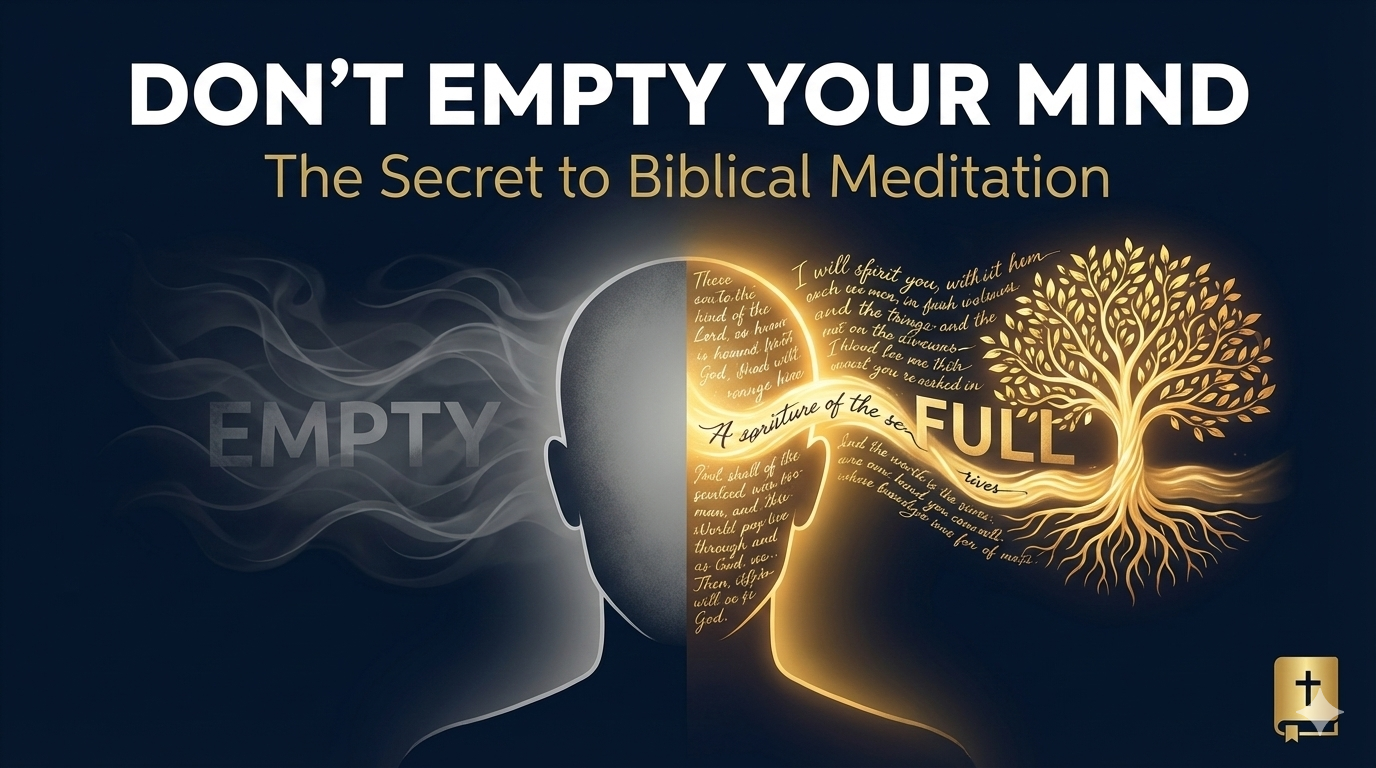
Biblical meditation fills your mind. Other meditation empties it.
Eastern meditation often focuses on clearing thoughts, achieving emptiness, or connecting with an impersonal force. Biblical meditation is the opposite—it's about filling your mind with God's Word and His character.
The focus is always outward and upward: God's Word, God's works, God's character.
3. The Hebrew Word Reveals the Method
The Hebrew word for meditate is "hagah." It means:
- To murmur — speaking quietly to yourself
- To mutter — repeating words under your breath
- To ponder — turning something over in your mind
Biblical meditation isn't silent emptiness. It's active engagement with Scripture—reading it, repeating it, pondering it, letting it sink deep.
Think of a cow chewing cud. It takes in food, then brings it back up to chew again, extracting every bit of nutrition. That's hagah—taking God's Word and "chewing" on it repeatedly.
4. David Meditated Constantly
The Psalms give us a window into David's meditation practice:
David meditated in the morning. Throughout the day. Even at night when he couldn't sleep.
Meditation wasn't an event for David. It was a lifestyle.
5. Meditation Brings Blessing and Success
Psalm 1 opens the entire book of Psalms with this promise:
The promise is clear:
- Stability — like a tree planted by water
- Fruitfulness — yielding fruit in season
- Resilience — leaves that don't wither
- Prosperity — whatever they do prospers
This isn't prosperity gospel. It's a spiritual principle: those who saturate their minds with God's Word experience deep, lasting flourishing.
6. What Biblical Meditation Looks Like in Practice
Based on Scripture, here's what biblical meditation involves:
Choose a verse or passage. Start small—even one verse is enough.
Read it slowly, multiple times. Don't rush. Let each word register.
Emphasize different words. "The LORD is my shepherd" ... "The Lord IS my shepherd" ... "The Lord is MY shepherd."
Ask questions. What does this reveal about God? How does this apply to my life? What response does this call for?
Speak it aloud. Remember hagah—murmur it, repeat it, let it become part of you.
Return to it throughout the day. Carry the verse with you. Let it surface during quiet moments.
7. Meditation Transforms Your Mind
Paul connects meditation to transformation:
How is your mind renewed? By filling it with truth. By meditating on Scripture until it reshapes how you think.
You become what you meditate on.
Fill your mind with worry, and you'll become anxious. Fill your mind with Scripture, and you'll be transformed into Christ's likeness.
8. You Can Start Today
Biblical meditation isn't complicated. You don't need special training or hours of free time.
Here's a simple way to begin:
- Pick one verse that speaks to your current situation
- Set aside 5 minutes in the morning
- Read it slowly at least 5 times
- Carry it with you throughout the day
- Return to it before bed
That's it. Simple, but powerful.
Apps like Faith: Scripture Meditation can help by creating personalized audio meditations with your chosen verses and calming background sounds—making it easier to meditate on Scripture during commutes, before bed, or whenever you need to center your mind on God's Word.
Biblical meditation isn't about emptying your mind. It's about filling it with the only thing worth building your life on: God's Word.
The Bottom Line
The Bible doesn't just permit meditation—it commands it.
But biblical meditation is distinct: it's focused on Scripture, actively engaging the mind, and designed to transform you from the inside out.
David did it. Joshua did it. And God promises blessing to everyone who makes it a daily practice.
The question isn't whether Christians should meditate. It's whether we'll obey the command to do so.