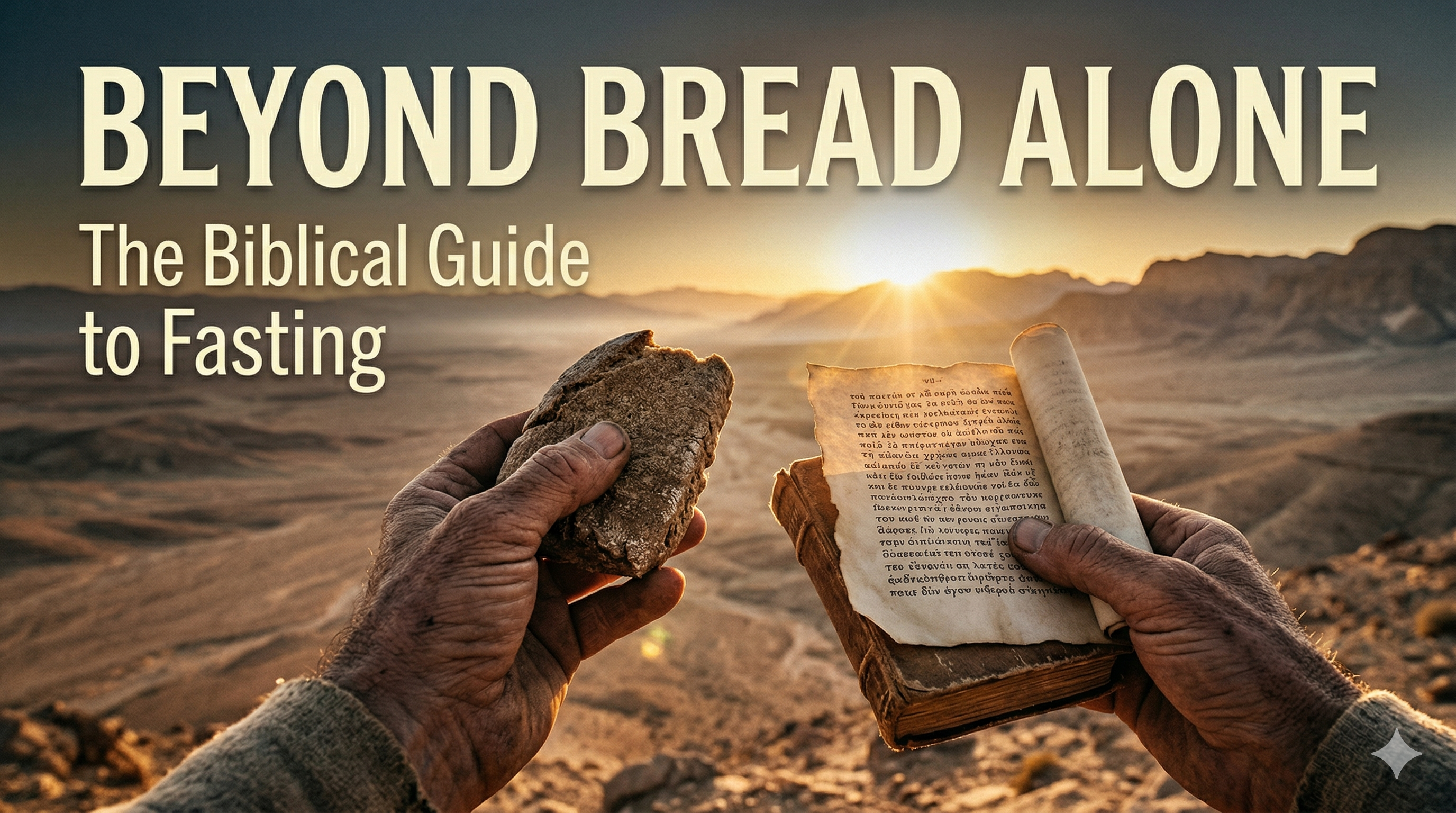
Fasting is one of the most powerful and most neglected spiritual disciplines in the Christian life. We talk about prayer constantly. We emphasize Bible reading, worship, and fellowship. But fasting -- the deliberate, voluntary abstaining from food or other comforts for the purpose of drawing closer to God -- is often treated as an optional extra, something that serious monks do but ordinary believers can safely ignore. And yet fasting appears throughout Scripture with a frequency and urgency that demands our attention. Moses fasted. David fasted. Esther fasted. Daniel fasted. Jesus fasted. The early church fasted. If the heroes of the faith considered fasting essential, perhaps we should ask ourselves why we have decided it is not.
The reason fasting is so powerful is not because going hungry earns God's favor -- it does not. Fasting is powerful because it exposes the truth about where you find your comfort and sustenance. When you remove food from the equation, you discover very quickly how dependent you are on physical satisfaction and how rarely you turn to God as your primary source of nourishment. Fasting creates a holy hunger that physical food cannot satisfy, and in that empty space, God meets you with a fullness that no meal ever could. It is not punishment. It is not performance. It is a deliberate act of faith that says, "I need You more than I need this."
Whether you have never fasted before or you are looking to deepen an existing practice, this guide will walk you through what the Bible says about fasting, the different types of fasts available to you, and practical step-by-step guidance for beginning a fast that draws you closer to God. Especially during seasons like Lent, fasting becomes a powerful way to prepare your heart for the celebration of Easter and the victory of the resurrection.
What the Bible Says About Fasting
Notice that Jesus does not say "if you fast." He says "when you fast." He assumed that His followers would fast as a regular part of their spiritual lives. But He warned them about the danger of performative fasting -- fasting for the purpose of being seen and admired by others. The fast that moves God's heart is the one that no one else knows about. It is the secret act of devotion between you and your Father, done not for applause but for intimacy. When you fast in secret, God -- who sees what is done in secret -- rewards you. The reward is not a cosmic vending machine payout. The reward is God Himself, encountered in the hidden place of hunger and prayer.
Through the prophet Isaiah, God reveals the kind of fasting that truly honors Him. It is not merely abstaining from food -- it is a fasting that produces justice, compassion, and action on behalf of the vulnerable. God is not interested in empty rituals. He wants fasting that changes you from the inside out and then overflows into how you treat the world around you. A fast that makes you more compassionate, more generous, more aware of the suffering around you -- that is the fast God has chosen. Let your hunger for food become hunger for justice, and your empty stomach become a reminder to fill the emptiness in someone else's life.
God uses fasting as a vehicle for wholehearted return. When you fast, you are not just giving up food. You are making a physical declaration that you are turning back to God with everything you have. The hunger pangs become prayer bells. The empty feeling in your stomach becomes a reminder of the fullness you are seeking in God alone. Joel's call is urgent and tender at the same time: return to Me. Not partway. Not halfheartedly. With all your heart. Fasting is one of the most tangible ways to demonstrate that kind of wholehearted devotion.
The early church did not make major decisions without fasting and prayer. When the Holy Spirit wanted to launch the greatest missionary movement in history, He spoke during a time of corporate fasting and worship. This is a pattern worth noticing: fasting creates a spiritual atmosphere in which the voice of God becomes clearer. It is not that God speaks louder when you fast. It is that your spiritual ears become more attuned when the noise of physical comfort is temporarily removed. If you are seeking direction for a major decision, fasting may be the missing ingredient in your discernment process.
Before Jesus began His public ministry, He fasted for forty days. Before He performed a single miracle, preached a single sermon, or called a single disciple, He fasted. This tells us something profound: even the Son of God considered fasting essential preparation for the work ahead. If Jesus needed to fast before entering the battle, how much more do we? His forty-day fast was the foundation for everything that followed -- every healing, every teaching, every act of power. Your fast may not be forty days long, but it serves the same purpose: preparing your heart for what God wants to do next.
Types of Biblical Fasting
Complete Fast
A complete fast involves abstaining from all food while drinking only water. This is the most traditional form of fasting and the one most commonly referenced in Scripture. Complete fasts can last anywhere from one meal to several days. If you are new to fasting, start with a single meal or a sunrise-to-sunset fast before attempting longer periods. Always listen to your body and consult a doctor if you have health conditions that could be affected by fasting. The purpose is never to harm yourself -- it is to create space for God.
Partial Fast (The Daniel Fast)
The Daniel Fast is based on Daniel 10:2-3, where Daniel ate no rich food, no meat, and drank no wine for three weeks. A modern Daniel Fast typically involves eating only fruits, vegetables, whole grains, and water -- eliminating processed foods, sugar, caffeine, and animal products. This type of fast is excellent for extended periods because it provides basic nutrition while still requiring significant sacrifice. It is also a wonderful option for those who cannot do a complete fast due to health reasons, work demands, or other responsibilities.
Intermittent Fast
An intermittent fast involves skipping one or two meals during the day and using that mealtime for prayer and Scripture meditation instead. Many Christians find this the most sustainable approach for regular fasting. You might skip lunch every Wednesday and spend your lunch hour in prayer, or fast from dinner to dinner once a week. The key is consistency and intentionality -- replacing the meal with focused time with God, not simply skipping a meal because you are busy.
Media and Technology Fast
While not a food fast in the traditional sense, fasting from media, social media, television, or technology is a powerful modern discipline. We are often more addicted to our screens than we are to food, and removing them exposes how much we depend on digital stimulation for comfort and distraction. A media fast creates hours of empty space in your day that can be filled with prayer, Scripture reading, and quiet reflection. Consider fasting from social media for a week and notice how dramatically it changes your inner life.
Specific Food Fast
A specific food fast involves giving up one particular food or beverage that you rely on heavily -- coffee, sugar, desserts, snacks, or any comfort food that occupies more of your attention than it should. Every time you crave that thing, you turn to God instead. This type of fast is an excellent starting point for beginners because it is manageable while still requiring genuine sacrifice. The craving itself becomes a prayer prompt, redirecting your attention to God dozens of times throughout the day.
How to Begin a Fast: A Step-by-Step Guide
1. Set Your Purpose. Every fast should have a purpose. Are you seeking direction for a specific decision? Are you repenting and returning to God? Are you interceding for someone who needs a breakthrough? Are you preparing your heart for a season like Lent or Easter? Write down your purpose before you begin. When hunger or discomfort tempts you to quit, your purpose will remind you why you started and give you the strength to continue.
2. Choose Your Type of Fast. Based on your experience, health, and circumstances, choose the type of fast that is right for you. If you have never fasted before, start small -- a single meal, a specific food, or a media fast. Do not try to fast for forty days on your first attempt. God honors the heart behind the fast, not the duration. A one-meal fast offered with genuine devotion is more pleasing to God than a week-long fast driven by religious performance.
3. Prepare Physically. If you are doing a food fast, prepare your body in the days beforehand. Reduce your intake of caffeine, sugar, and heavy foods gradually so that the transition is less jarring. Drink plenty of water. Get adequate rest. Fasting should be a spiritual discipline, not a health crisis. If you have diabetes, are pregnant, or have any medical condition that affects your ability to fast from food, consult your doctor and consider a non-food fast instead.
4. Prepare Spiritually. Before your fast begins, spend time in prayer asking God to prepare your heart. Confess any known sin. Release any bitterness or unforgiveness. Come to the fast with a clean conscience and an open heart, ready to hear from God. Read through the fasting scriptures in this guide and let them set the tone for your fast.
5. Replace Meals with Prayer and Scripture. This is the most important step. Fasting without prayer is just a diet. When you would normally eat, pray instead. Open your Bible and meditate on Scripture. Journal what God is saying to you. The time you would have spent preparing, eating, and cleaning up a meal becomes sacred time with God. This is where the transformation happens -- not in the hunger itself, but in what fills the space that food usually occupies.
6. Break Your Fast Gently. When your fast ends, resist the urge to celebrate with a large meal. Your body -- and your spirit -- need a gentle transition. Break your fast with something simple: broth, fruit, or a light meal. Use the first meal after your fast as an act of gratitude, thanking God for His provision and for everything He revealed during your time of fasting. Let the discipline of the fast carry forward into the discipline of how you eat afterward.
Scripture Meditation During Your Fast
Fasting and Scripture meditation are natural partners. Here are five ways to weave God's Word into your fasting practice.
1. Choose a Theme Verse for Your Fast. Select one verse that captures the purpose of your fast and return to it throughout the day. Write it on a card, set it as your phone wallpaper, or tape it to your bathroom mirror. Every time hunger pangs hit, read the verse aloud. Let it become the refrain of your fast -- a constant reminder of why you are doing this and who you are doing it for.
2. Read a Psalm at Every Mealtime. Instead of eating breakfast, lunch, and dinner, read a Psalm at each of those times. The Psalms are filled with the language of hunger, longing, and deep desire for God -- emotions that are amplified and made real during a fast. By the end of a single day, you will have read three Psalms that speak directly into the experience of your fast.
3. Meditate on Jesus' Temptation in the Wilderness. Read Matthew 4:1-11 slowly during your fast. Notice how Jesus responded to every temptation with Scripture. His example shows you that the Word of God is your sustenance when physical food is absent. "Man shall not live on bread alone, but on every word that comes from the mouth of God" -- this truth moves from abstract to visceral when you are actually fasting.
4. Keep a Fasting Journal. Write down what God is saying to you during your fast. Record the verses that stand out, the thoughts that arise during prayer, and the emotions you experience as the fast progresses. Many believers report that their most significant spiritual breakthroughs came during fasts, and a journal ensures that you capture those revelations before they fade.
5. Use Guided Scripture Meditations to Fill the Empty Spaces. The Faith: Scripture Meditation app is the perfect companion for a fast. Instead of reaching for a snack when hunger strikes, reach for a guided meditation. Let God's Word fill the emptiness that food would normally occupy. Build custom meditation sessions around your fasting theme verses and let the app guide you into deeper encounters with God during every moment of your fast.
Fasting is not about emptying yourself of food. It is about filling yourself with God -- trading temporary sustenance for eternal nourishment, and discovering that He is more than enough.
Conclusion
Fasting is not a relic of ancient religion. It is a living, powerful, deeply practical spiritual discipline that God has given you for exactly the moments when prayer alone does not feel like enough. It is for the seasons when you need to hear from God with clarity. It is for the decisions that require more than human wisdom. It is for the spiritual battles that demand more than casual devotion. Fasting says to God, "I am serious about this. I want You more than I want comfort. I need You more than I need food."
If you have never fasted before, start today. Not next week. Not next Lent. Today. Choose one meal to skip, and spend that time in prayer and Scripture instead. You will be surprised at how quickly God meets you in the empty space. And if you are an experienced faster, consider going deeper -- a longer fast, a more focused purpose, a more intentional engagement with Scripture during the hours of hunger. God rewards those who seek Him earnestly, and there is no more earnest way to seek Him than to set aside the most basic human need and say, "You are my sustenance. You are my bread. You are enough."